
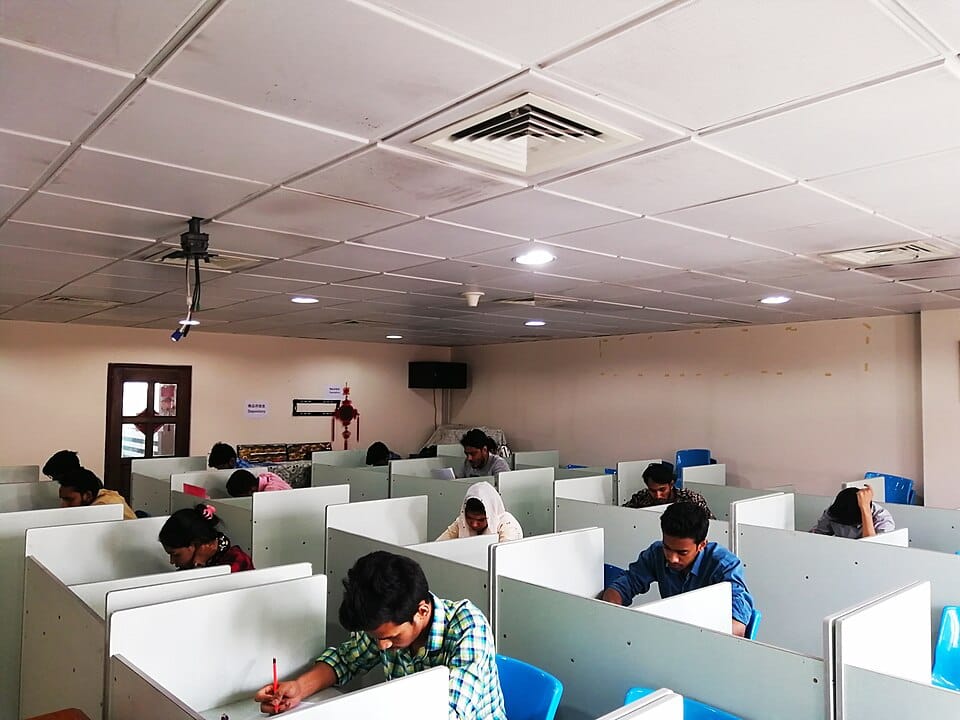
HSK stands for Hanyu Shuiping Kaoshi. It is the official Chinese language proficiency test, recognised worldwide, and it measures listening, reading and writing rather than speaking.
The levels
HSK runs from level 1 to level 6. Level 1 is a few hundred words. Level 6 is close to fluent.
- HSK 1 to 3 — basic conversation and everyday reading
- HSK 4 — the level most universities ask medical students to reach before clinical years
- HSK 5 and 6 — required for Chinese-taught degrees and most professional work
Who actually needs it
Not everyone, and this is where students get confused.
If you are joining an English-medium programme, you do not need HSK to start. Several universities we work with — Gannan Medical University, for example — require no HSK 3 or HSK 4 at all to begin. Shanxi Medical University does not require HSK-4 in the first year.
If you are joining a Chinese-taught programme, you will usually need HSK 4 or 5 before you can enrol.
If you are applying for the Chinese Government Scholarship, the requirement depends on the programme you pick.
Why you will end up learning it anyway
Medical students see real patients from the clinical years onwards, and those patients speak Chinese. Most universities therefore expect HSK-4 before clinical rotations begin, even on an English-medium degree. Jianghan University, for instance, asks students to pass HSK-4 before the end of the first academic year.
Treat HSK as something you will need eventually, not something that blocks you from starting. Plan for it from your first semester and it is comfortable. Leave it to the last month and it is not.
How to prepare
Universities run Chinese classes alongside your degree, and those classes are aimed at the HSK syllabus. Students who take them seriously in year one generally pass HSK-4 without extra tuition.
If you want to arrive already ahead, an eight-month Chinese language programme before your degree is the usual route — and it can be combined with CSCA preparation at the same time.
Ask us which universities require HSK and when, for the specific programme you are considering. The answer differs by university and it changes.
Still not sure how this applies to you?
Every university sets its own rules and they change between intakes. Send us your situation and we will give you the specific answer, not the general one.